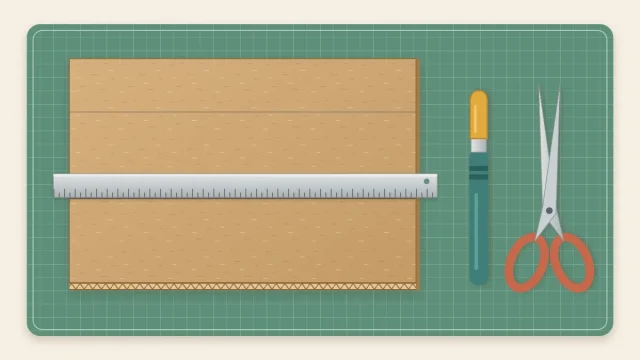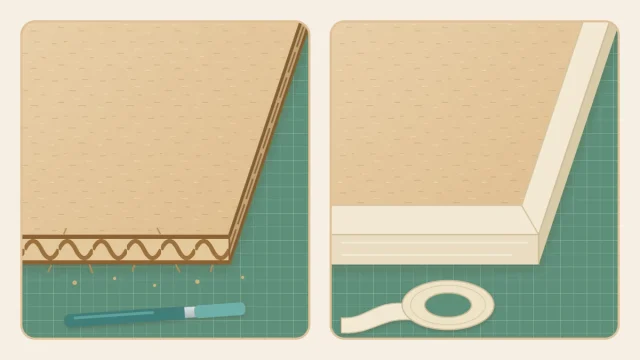
Clean Cardboard Edges: 6 Ways to Hide the Corrugation
Six edge finishes compared by effort and look: paper tape binding, glued paper strips, folded flaps, light sanding, filler with paint and decorative trim, plus how to handle corners.
Creative Cardboard Projects Made Simple
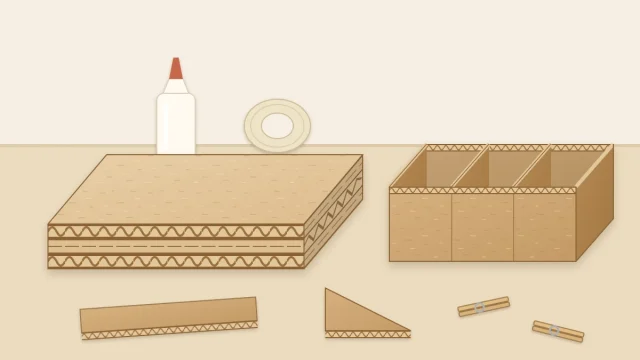
Core skills explained one at a time: cutting, measuring, scoring and folding, gluing, painting, strengthening, and clean edges.
6 tutorials published
Six edge finishes compared by effort and look: paper tape binding, glued paper strips, folded flaps, light sanding, filler with paint and decorative trim, plus how to handle corners.
Stop shelves sagging and walls bulging with crossed laminated layers, doubled bases, ribs, corner gussets, folded rims and a paper-and-glue skin, with honest limits on what cardboard should carry.
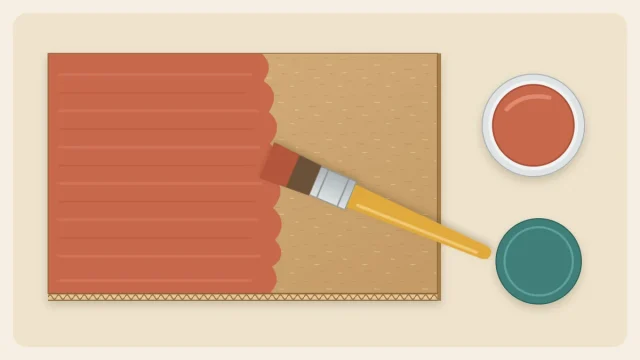
Why cardboard curls when it gets wet and how to stop it: seal first, paint thin coats on both faces, dry under a weight, or cover the panel with paper or fabric instead.
A comparison of white glue, tacky glue, glue stick, low-temperature hot glue and tapes, plus four joint types and the thin-coat, clamp-and-wait routine that keeps them together.
Mark out from one reference edge, check for square, press a groove with a blunt tool and fold over a table edge. A step-by-step method for folds that land where you drew them.
Which tool to use on thin paperboard, corrugated board and chipboard, how to make straight cuts in several light passes, and the safer alternatives to an open blade.