Easy Cardboard Craft Ideas: 12 Quick Projects for an Afternoon
Twelve small, original cardboard projects you can finish in an afternoon, from bookmarks and gift tags to a phone stand and a drawer divider, each with what it needs and a rough time.
Creative Cardboard Projects Made Simple
Original cardboard projects and the techniques behind them, explained step by step and made from boxes you already have.
New to cardboard? Work through these four guides in order.
A plain starting map for new cardboard crafters: where to find clean boxes, the three skills every project uses, how to set up a small work surface, and which projects to make first.
Single-wall, double-wall, chipboard, thin paperboard and tubes explained: how to tell them apart, why flute direction matters, and which board to choose for each kind of project.
Which tool to use on thin paperboard, corrugated board and chipboard, how to make straight cuts in several light passes, and the safer alternatives to an open blade.
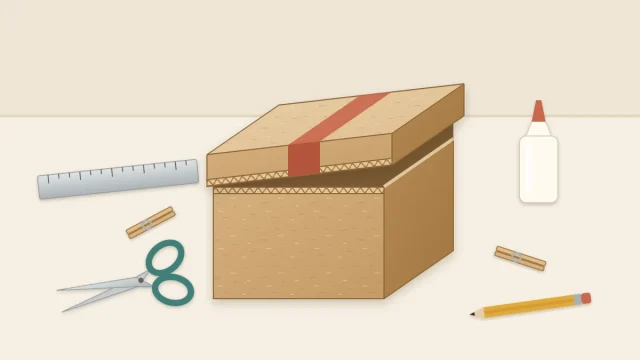
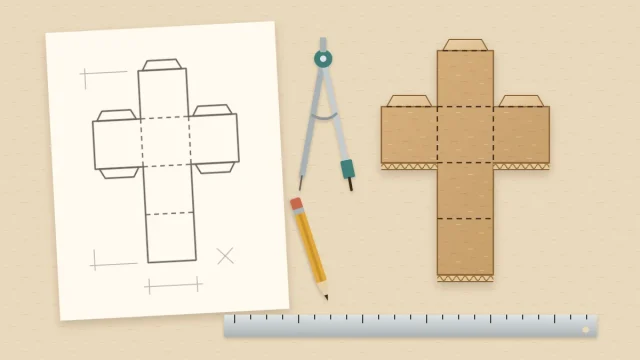
Draw one cross-shaped net, score it, fold it and glue four corner tabs to make a small 4 x 4 x 2 in box, then repeat with slightly different numbers for the lid. Includes the arithmetic for any other size.
Quick projects that need one box, a pair of scissors and an afternoon.
Twelve small, original cardboard projects you can finish in an afternoon, from bookmarks and gift tags to a phone stand and a drawer divider, each with what it needs and a rough time.
Build a shallow 8 x 5 in catch-all tray from one shipping box: a simple net with corner tabs, a second base layer for stiffness, a paper lining and a taped rim, with a cutting list and resizing rules.
Five scissors-only bookmark designs from cereal-box card, each with measurements: a tasseled strip, a corner pocket, a layered leaf, a tongue clip and a woven strip, plus how to cover them and keep them thin.
Draw one cross-shaped net, score it, fold it and glue four corner tabs to make a small 4 x 4 x 2 in box, then repeat with slightly different numbers for the lid. Includes the arithmetic for any other size.
Wall art, frames and shelf accents built from layered and scored cardboard.
Weave a 9 in wall panel from strips of thin paperboard: how many strips to cut, how to set them up, the over-under sequence, locking the edges with a frame and three pattern variations.
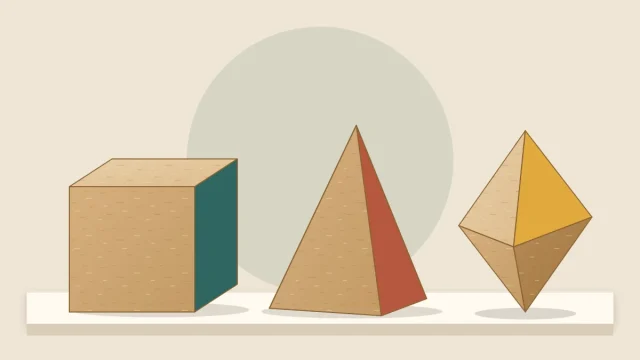
Draw and fold three faceted shapes from thin paperboard with a ruler and compass: a cube, a square-based pyramid and an eight-sided gem, each with net dimensions, tab counts and resizing rules.
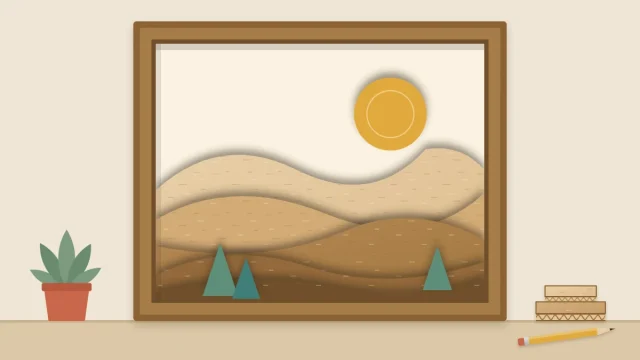
Design and build your own relief landscape from five stacked cardboard layers and a sun, using a simple planning grid, a cutting list and hidden spacers that create real shadows.
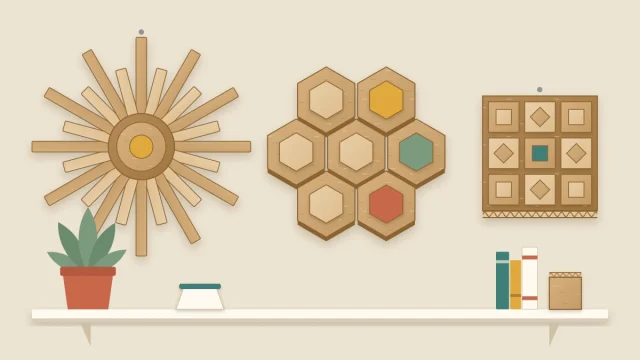
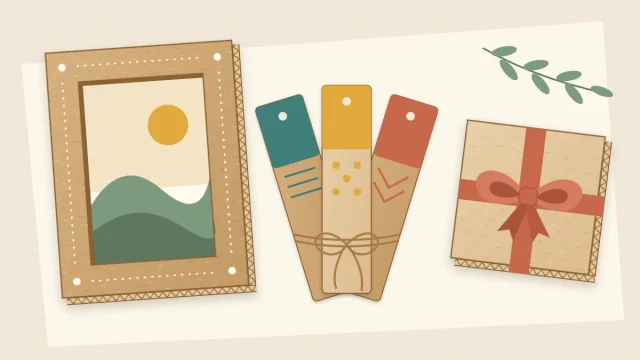
Seven original wall art ideas in cardboard, from relief tiles and a sunburst to a honeycomb cluster and a woven panel, with the main sizes for each and simple ways to hang them.
Drawer dividers, desk organizers and storage boxes sized to fit your own space.
Cut an upright magazine holder from a narrow shipping box: where to mark the angled cut, how to reinforce the base and front lip, and how to bind and cover it for a matching set.
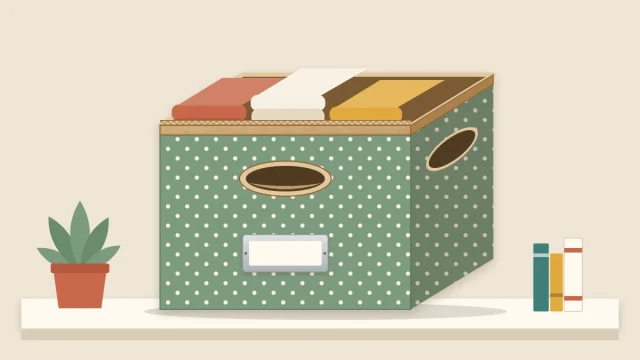
Turn a clean shipping box into a shelf storage box: cut it to height, fold the flaps inside to double the walls, add a second base, cut reinforced oval handles and cover it.
Measure your drawer, plan a grid on paper and cut slotted cardboard strips that slide together without glue. Includes a worked example and fixes for a loose or tight fit.
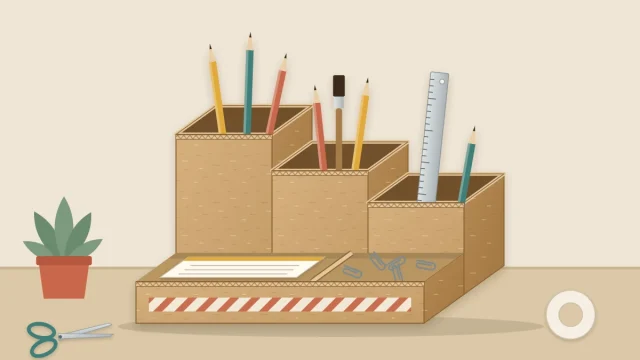
Build a stepped desk organizer 9 in wide from one shipping box: a full cutting list, where to cut the steps, the assembly order and simple rules for changing the size.
Models, gift ideas and seasonal builds for when you want a bigger challenge.
Two autumn projects from recycled boxes: a 15-leaf garland cut from thin card in three freehand shapes, and a ribbed pumpkin built from four identical slotted discs with a rolled stem. Sizes and spacing included.
Three natural-looking holiday projects drawn from measurements: a slot-together tabletop tree, a layered five-point star laid out with a compass, and flat hanging ornaments with white painted accents.
Nine handmade gifts you can build from cardboard, each matched to a recipient, an occasion and an honest effort level, with the finishing steps that make them look worth giving.
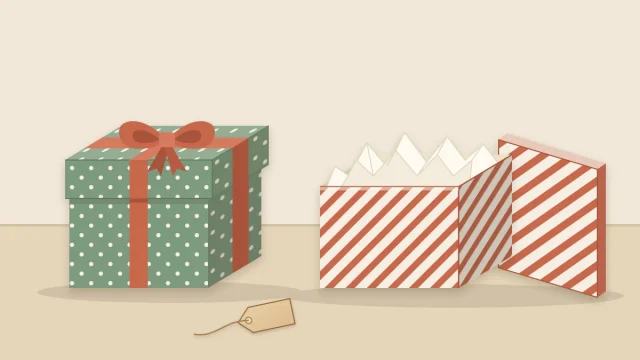
Size a rigid two-piece gift box to the present, cut the base and lid from chipboard, tape the corners and wrap both in decorative paper with neat corners. Includes a worked example and the sums for any size.
Cutting, scoring, curving, joining and finishing: the skills every project relies on.
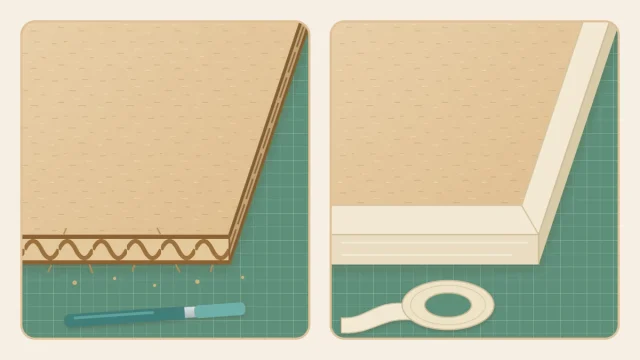
Six edge finishes compared by effort and look: paper tape binding, glued paper strips, folded flaps, light sanding, filler with paint and decorative trim, plus how to handle corners.
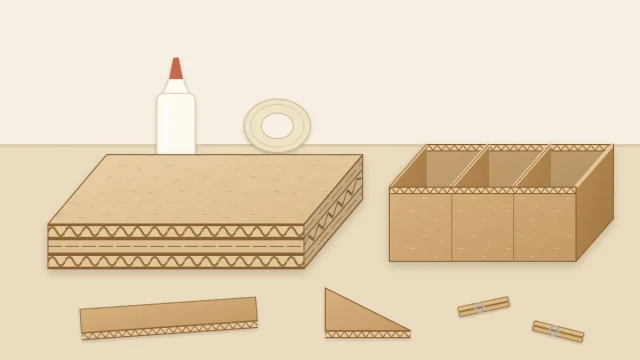
Stop shelves sagging and walls bulging with crossed laminated layers, doubled bases, ribs, corner gussets, folded rims and a paper-and-glue skin, with honest limits on what cardboard should carry.
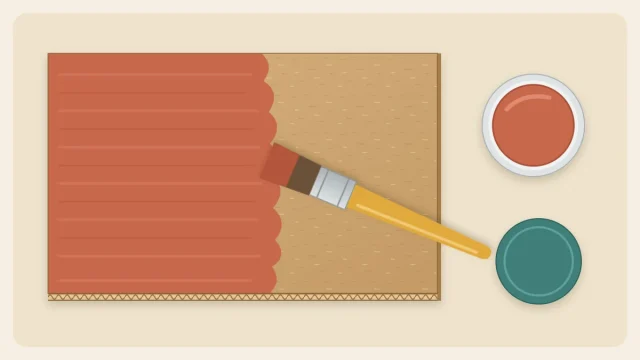
Why cardboard curls when it gets wet and how to stop it: seal first, paint thin coats on both faces, dry under a weight, or cover the panel with paper or fabric instead.
A comparison of white glue, tacky glue, glue stick, low-temperature hot glue and tapes, plus four joint types and the thin-coat, clamp-and-wait routine that keeps them together.
Two autumn projects from recycled boxes: a 15-leaf garland cut from thin card in three freehand shapes, and a ribbed pumpkin built from four identical slotted discs with a rolled stem. Sizes and spacing included.
Three natural-looking holiday projects drawn from measurements: a slot-together tabletop tree, a layered five-point star laid out with a compass, and flat hanging ornaments with white painted accents.
Nine handmade gifts you can build from cardboard, each matched to a recipient, an occasion and an honest effort level, with the finishing steps that make them look worth giving.
Size a rigid two-piece gift box to the present, cut the base and lid from chipboard, tape the corners and wrap both in decorative paper with neat corners. Includes a worked example and the sums for any size.
Turn any idea into a pattern you drew yourself: list the faces, unfold them into a net, count the glue tabs, allow for board thickness and prove it with a paper mockup before cutting cardboard.
Learn how to work small with cardboard: choose a simple scale, use thin paperboard, glue with a toothpick and build a miniature chair and table from a few measured rectangles.
Save a clean shipping box, grab scissors, a metal ruler and some glue, and pick a project. Every tutorial is free to read, with no sign-up needed.