Geometric Cardboard Decor: Simple 3D Shapes to Make
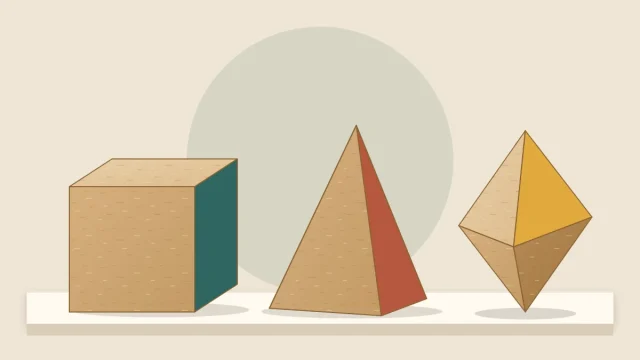
Draw and fold three faceted shapes from thin paperboard with a ruler and compass: a cube, a square-based pyramid and an eight-sided gem, each with net dimensions, tab counts and resizing rules.
Creative Cardboard Projects Made Simple
30 tutorials published
Draw and fold three faceted shapes from thin paperboard with a ruler and compass: a cube, a square-based pyramid and an eight-sided gem, each with net dimensions, tab counts and resizing rules.
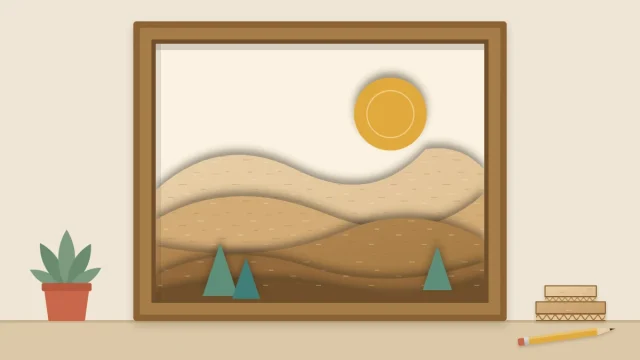
Design and build your own relief landscape from five stacked cardboard layers and a sun, using a simple planning grid, a cutting list and hidden spacers that create real shadows.
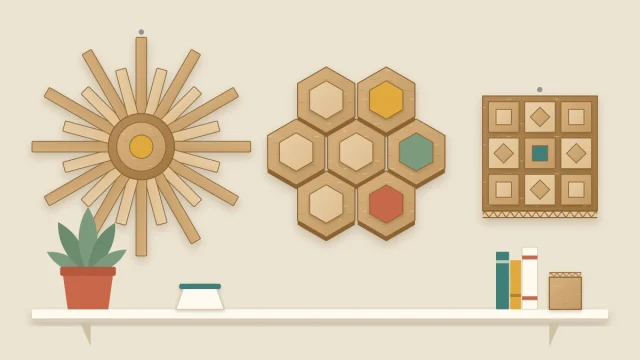
Seven original wall art ideas in cardboard, from relief tiles and a sunburst to a honeycomb cluster and a woven panel, with the main sizes for each and simple ways to hang them.
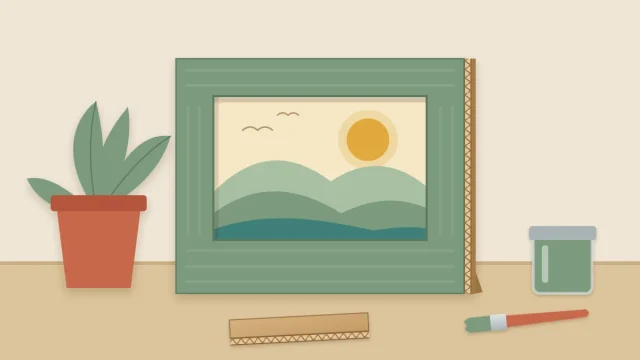
Build a three-layer frame for a 4 x 6 in print: a front with a window, a spacer that forms a slide-in pocket and a solid back, plus a folded easel stand or a hanging loop.
Twelve small, original cardboard projects you can finish in an afternoon, from bookmarks and gift tags to a phone stand and a drawer divider, each with what it needs and a rough time.
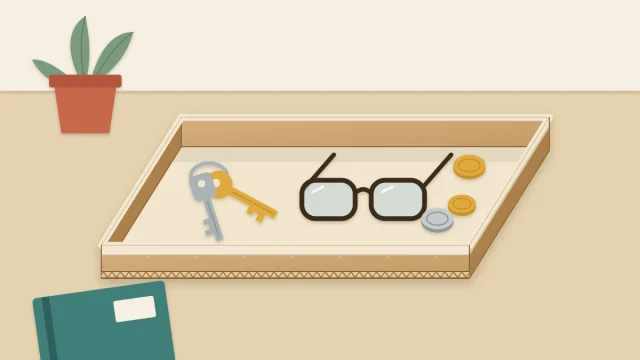
Build a shallow 8 x 5 in catch-all tray from one shipping box: a simple net with corner tabs, a second base layer for stiffness, a paper lining and a taped rim, with a cutting list and resizing rules.
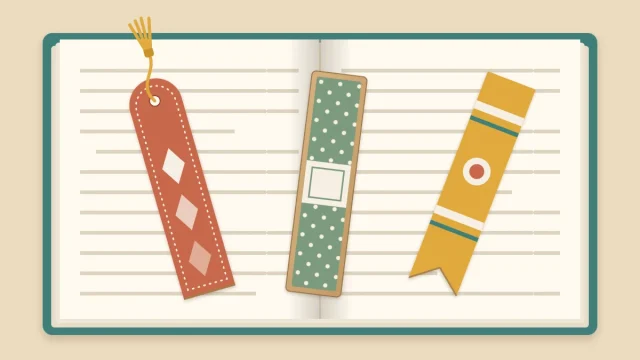
Five scissors-only bookmark designs from cereal-box card, each with measurements: a tasseled strip, a corner pocket, a layered leaf, a tongue clip and a woven strip, plus how to cover them and keep them thin.
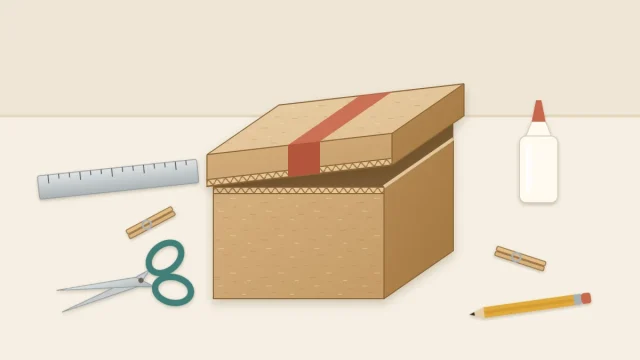
Draw one cross-shaped net, score it, fold it and glue four corner tabs to make a small 4 x 4 x 2 in box, then repeat with slightly different numbers for the lid. Includes the arithmetic for any other size.
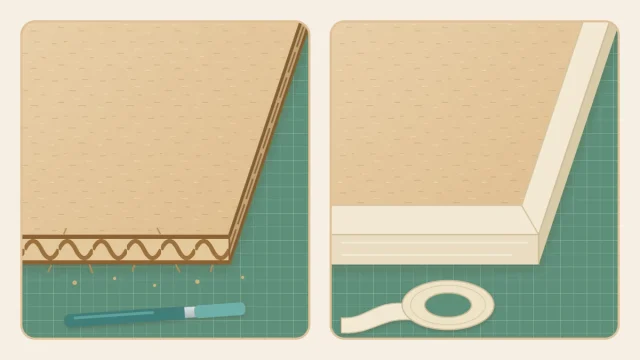
Six edge finishes compared by effort and look: paper tape binding, glued paper strips, folded flaps, light sanding, filler with paint and decorative trim, plus how to handle corners.
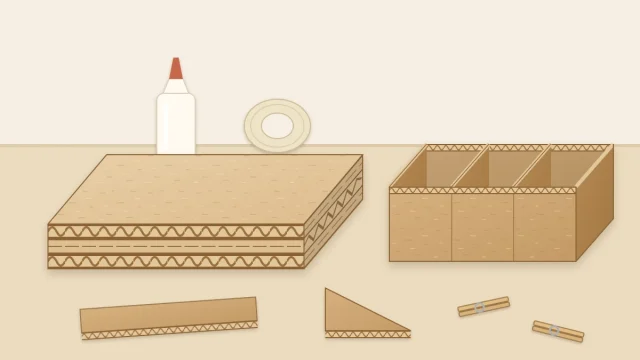
Stop shelves sagging and walls bulging with crossed laminated layers, doubled bases, ribs, corner gussets, folded rims and a paper-and-glue skin, with honest limits on what cardboard should carry.
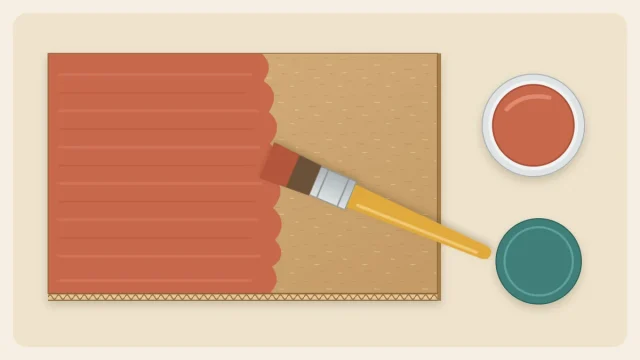
Why cardboard curls when it gets wet and how to stop it: seal first, paint thin coats on both faces, dry under a weight, or cover the panel with paper or fabric instead.
A comparison of white glue, tacky glue, glue stick, low-temperature hot glue and tapes, plus four joint types and the thin-coat, clamp-and-wait routine that keeps them together.